Key takeaways
The AP Physics 2 cheat sheet serves as a vital tool for students preparing for their exams by summarizing essential formulas and concepts in a concise format. Understanding how to effectively utilize this cheat sheet can significantly enhance study efficiency and exam performance.
- Students must grasp key formulas in fluids, electricity, and thermodynamics, as these are crucial for the AP Physics 2 exam (College Board).
- Organizing formulas by topic on the cheat sheet aids in quick access and better retention during study sessions.
- The AP Physics 2 curriculum includes advanced topics such as optics and modern physics, building on concepts from AP Physics 1.
- Regular practice with real-life problems and past exam questions helps solidify understanding and application of complex equations.
Contents
AP Physics 2 cheat sheet is a short formula guide for the subject’s exam. This guide helps students quickly remember important formulas, and concepts. We’ll give tips on how to make the best use of this cheat sheet.
What Are the Must-Know Formulas for AP Physics 2?
Students need to remember key formulas about fluids and electricity. Kids also need to understand thermodynamics pretty well. The exam includes a formula sheet, but students have to understand them separately.

Key Equations in Electricity and Magnetism
The main formulas students need to know to explain how electric and magnetic fields work are in the table below.
| Equation Name | Formula | Description |
| Ohm’s Law |  |
Voltage depends on resistance and current |
| Electric Field | 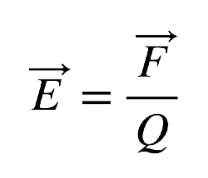 |
The force per unit charge in an electric field |
| Coulomb’s Law | 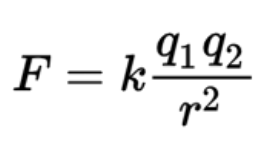 |
The force between two charges depends on their size and distance |
| Faraday’s Law of Induction | 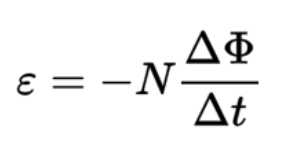 |
A changing magnetic field induces an electromotive force |
Essential Formulas in Fluid Mechanics
Fluid mechanics explains how liquids move. Fluid mechanics also explains how gases move. Each formula shows one idea at a time:
| Equation Name | Formula | Description |
| Continuity Equation | 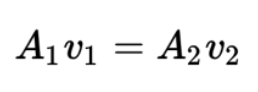 |
The volume of fluid remains constant in a closed system |
| Bernoulli’s Equation |  |
The total energy in a fluid remains constant along a streamline |
| Buoyant Force | 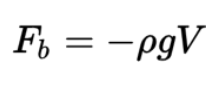 |
The upward force on an object in a fluid depends on fluid density and displaced volume |
Understanding Thermodynamics Equations
Thermodynamics explains how heat moves. Each formula shows one rule for energy and temperature:
| Equation Name | Formula | Description |
| First Law of Thermodynamics | 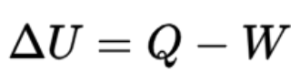 |
The change in internal energy equals heat added minus work done |
| Ideal Gas Law |  |
Pressure, volume, and temperature are related in a gas |
| Heat Transfer Equation | 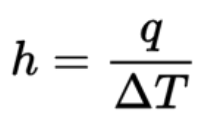 |
The amount of heat energy depends on mass, specific heat, and temperature change |
How to Effectively Review for the AP Physics 2 Exam?
“The new physics courses are more in line with the Next Generation Science Standards, the set of science benchmarks that 15 states and the District of Columbia have adopted”

The list below gives examples of how to review for this exam in the best possible way:
- Make a learning calendar
- Take the formula sheet
- Practice with task from a real life
Top Study Tips for Physics 2
Many kids solve practice problems to remember formulas and apply them in the right way to achieve better results. A good solution is to stop and see your mistakes after each problem to avoid repeating them again. Use visual elements to get a better knowledge of the concepts. Some kids watch videos to see how some concepts work in real life. Other kids write key formulas and short explanations for quick revision. Contact Legacy Online School to get more tips.
Using a Cheat Sheet for Efficient Review
Many students do not know how to use a cheat sheet correctly. Here are some tips to use the cheat sheet correctly. Write formulas in large, clear text for easy reading. Add short notes next to formulas to explain their use. Keep the sheet small to avoid too much information. Group formulas by topic for faster searching. Place the most important ones at the top for quick access.
Exploring AP Physics 2 Review Books
Legacy Online School gives students a complete platform where they can find all the materials needed to get a high score on the exam. Students should also visit the College Board’s website and review the materials they provide.
What Topics Are Included in the AP Physics 2 Curriculum?

AP Physics 2 covers advanced topics in Physics. Each unit builds on basic ideas from AP Physics 1:
| Unit | Main Topic | Focus of the Unit |
| 1 | Fluids | Students study how pressure and motion affect liquids |
| 2 | Thermodynamics | Students explore how heat moves between systems |
| 3 | Electric Force & Fields | Students learn how charge creates electric forces |
| 4 | Electric Circuits | Students work with series circuits and parallel circuits |
| 5 | Magnetism | Students see how moving charges interact with magnetic fields |
| 6 | Optics | Students use mirrors and lenses to understand how light behaves |
| 7 | Modern Physics | Students study atoms, nuclei, and light as a wave and a particle |
Overview of Modern Physics Topics
Quantum physics in the first topic. This topic explains how light and matter behave at a very small scale. Nuclear physics is the second topic. This topic explores atoms, radiation, and nuclear energy. Modern inventions like lasers and nuclear power use physics ideas from these topics.
In-Depth Look at Light and Optics
Students need to understand light is everywhere in real life. Studying this subject helps them see what it means for everyone. Water in a glass, a reflection in a lake, and other things are directly connected to light and optics. This subject introduces children to refraction and other light properties explaining many things in the world.

Exploring Electricity and Magnetism
Electricity and magnetism work together in many devices. Moving electric charges create magnetic fields. Changing magnetic fields produce electric currents. This makes motors, generators, and other machines work.
A simple example is a doorbell. Pressing the button completes a circuit. Electricity flows through a coil and creates a magnetic field. The magnet pulls a metal hammer, which hits the bell and makes a sound. The circuit breaks when the button is released, and the magnet turns off.
The same idea is used in electric trains and factory machines. Learning about electricity and magnetism helps understand how everyday devices work.
How to Use the AP Physics 2 Cheat Sheet for Better Exam Preparation?

A cheat sheet helps with quick review before the exam. Each section shows one topic with key formulas and symbols. Here are some recommendations about using this sheet:
| Section of the Cheat Sheet | What It Helps With? |
| Fluids | Solving pressure problems and analyzing fluid motion |
| Thermodynamics | Finding how heat flows through systems and how energy changes during heating |
| Electricity | Solving problems that ask about voltage. Understanding how current moves in circuits. Calculating resistance in wires or devices. |
| Magnetism | Predicting how moving charges react when near magnetic fields |
| Modern Physics | Explaining atomic behavior and solving problems about particles and light energy |
Integrating the Cheat Sheet into Study Plans
Here are some tips to make the cheat sheet a regular element of studying and get the most out of it:
- Place it in a visible spot for quick access
- Review it before solving problems to recall formulas faster
- Rewrite difficult formulas by hand to improve memory
- Say formulas out loud to make learning active
- Use it in group study sessions to explain concepts
- Teach formulas to classmates to understand them better
- Compare notes with others to organize information differently
- Apply formulas to real-life situations for better learning
Quick Reference for Physics Formulas
Organizing the cheat sheet in a clear way makes finding information faster. Grouping formulas by topic, such as electricity, fluids, and thermodynamics, helps with quick access. Keeping the most-used equations at the top makes them easier to find during practice.
Writing formulas with simple explanations helps students understand their meaning. Adding small notes about units and common mistakes prevents errors during the exam. Using symbols and short keywords instead of long sentences saves space and makes the sheet easier to read.
Color coding different sections improves readability. Highlighting key formulas makes them stand out. Using different colors for physics topics helps students find information without searching too much.
Keeping the cheat sheet updated is important. Checking it after every practice test helps find missing formulas. Removing unnecessary information prevents the sheet from becoming too crowded.
Benefits of a Digital Cheat Sheet
A digital cheat sheet gives benefits not possible with a paper one. Such a sheet works on any device for quick access. This sheet is easy to edit and update without rewriting. Search function helps find formulas fast. Kids can easily share this sheet with classmates.
What Are the Common Issues Students Face in AP Physics 2?
“The difficulty of AP Physics 2 can vary depending on several factors, including the complexity of the subject matter, a student’s mathematical aptitude, problem-solving skills, background knowledge, and quality of instruction”
AdmissionSight

Many kids have problems with understanding new concepts. Tasks about math and symbols can be quite difficult for a lot of students. Explaining answers in words is another issue getting many kids.
Challenges in Understanding Complex Equations
Many students have problems with symbols and formulas. Achieving each equation part by part is the best approach to get it well. Practicing simple problems before solving harder ones helps kids understand the general principle in such tasks. Writing explanations next to formulas helps remember their meaning.
Common Mistakes in Problem-Solving
We created a table with common problems to help students improve their skills in this area:
| Mistake | Effect | Fix |
| Forgetting units | Gives incorrect answers | Always write units |
| Misreading the question | Leads to problems in understanding | Read carefully |
| Wrong formula | Solves the task in a wrong way | Choose formula first |
| Skipping steps | Makes checking difficult | Solve step by step |
| Ignoring direction | Changes the result | Check directions |
Strategies to Overcome Difficult Topics
Good results in this subject come from daily effort. Regular study helps students remember key facts. Practice with past questions shows the test format. There are many other useful strategies for students. We will focus on five strategies anyone can use:
- The Pomodoro Technique. This method helps you stay focused. Set a timer for 25 minutes, study with full concentration, then take a 5-minute break. Repeat this cycle to have enough energy for learning
- Work with long-term memory. Go back to previous topics from time to time to make sure you don’t forget them after learning new material
- Practice tests. Look for sample exams online. Practicing with real questions will help you understand what you’re good at and what you need to work on before the actual exam
- No to rote memorization. Focus on truly understanding concepts so you can answer any question, rather than hoping for familiar ones
- Ask for help. Don’t hesitate to reach out to teachers or classmates when you’re experiencing some problems. They will help you solve all the issues
Contact Legacy Online School to get more strategies and professional support from our experts