Key takeaways
Saudi Arabia's public schools are free, Arabic-medium, and built for Saudi nationals. That sentence explains most of the decisions expat families end up making. The educational system has four clear stages: kindergarten, primary, intermediate, and secondary – each with defined entry ages and exit points. Private education is available in most major cities and covers British, American, IB, and other curricula. And beyond secondary school, the kingdom has 24 government universities in Saudi Arabia plus a growing private tertiary sector. Knowing this structure doesn't make the paperwork disappear, but it does help you ask the right questions.
- Public schooling is free for Saudi citizens; expat children in the kingdom typically attend private international schools.
- The kingdom has 24 government universities in Saudi Arabia, along with private institutions – including King Saud University (established 1957), King Abdulaziz University, and King Fahd University of Petroleum and Minerals.
- Vision 2030 has allocated significant investment to education reform across all levels – expanding vocational pathways, modernizing the general curriculum, and growing the private education sector.
- Special education services exist within the public system, though international families usually access these through private schools or online providers.
Contents
We are a US-accredited private international online school that coexists with local schooling. Families are responsible for ensuring compliance with any local education requirements applicable to their situation.
How the Saudi Educational System Is Structured
Saudi Arabia follows a 6-3-3 model, though in practice the stages are labeled differently from what most Western families are used to.
Primary education
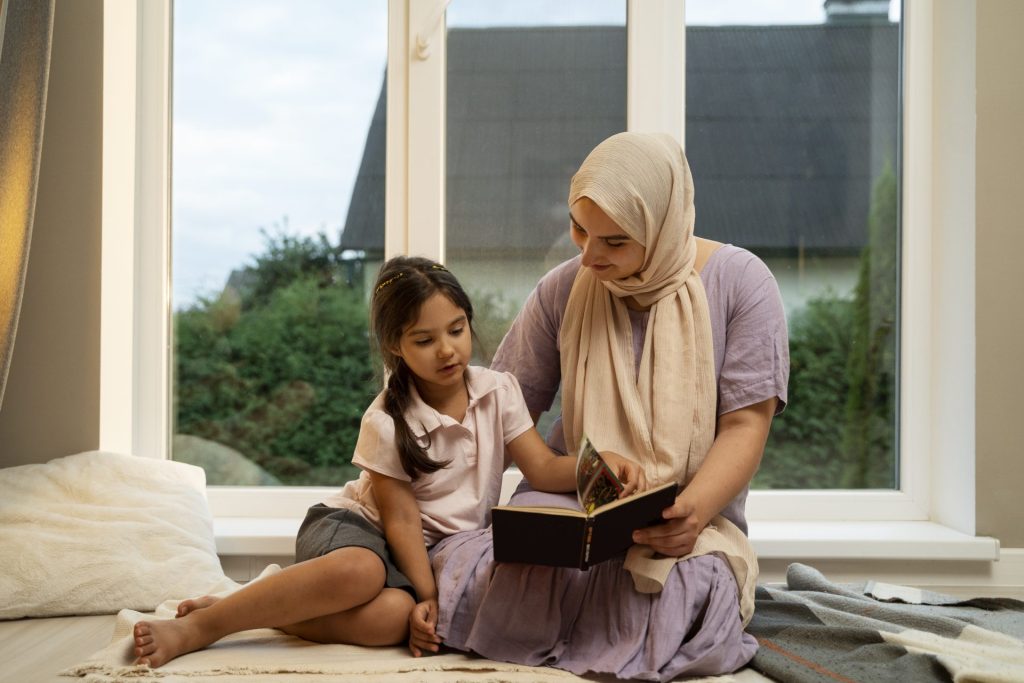
Grade 1 through grade 6. Children typically start at age 6. Children typically start at age 6. Public primary schools are government-funded, use the Arabic national curriculum, and include Islamic education as a core subject. Most expat families do not enroll children in Saudi public primary schools – not because it’s prohibited in all cases, but because instruction is in Arabic and the curriculum is designed for Saudis.
Intermediate education
Three years – grades 7 through 9. Students follow a general curriculum with elective options introduced in the later grades. This stage bridges primary school and the more specialized secondary years.
Secondary education
Running from grade 10 to grade 12, it splits into two tracks: a general education track (sciences or humanities and social sciences) and a specialized secondary education track that leads toward vocational education and training programs or technical pathways. Specialized secondary education is increasingly emphasized under Vision 2030, which links skills development to national economic priorities.
Tertiary education
It includes university education at both government and private institutions. According to UNESCO education data for Saudi Arabia, adult literacy rates have improved significantly over recent decades, and higher education participation has expanded notably since the early 2000s. There are 24 government universities in Saudi – King Saud University was established in 1957 and remains the largest. University education is free for Saudis; tuition applies for international students. Post-secondary education also includes technical institutes and vocational training programs under the Technical and Vocational Training Corporation (TVTC).
Who Manages General Education in the Kingdom
The Ministry of Education (MOE) oversees the country’s education – public schools from kindergarten through secondary level. The Ministry of Higher Education (now merged into the MOE) handles universities and tertiary institutions. Several government agencies in the kingdom share responsibility for specialized sectors: the General Presidency for Girls’ Education was historically separate but was merged into the main ministry structure in 2016 under consolidation reforms.
The Saudi government has moved aggressively to modernize education policy, reduce illiteracy among Saudi adults in older cohorts, and increase enrollment in technical and administrative fields. Education management has shifted toward centralized oversight with more curriculum transparency requirements for private and foreign schools. Saudi Arabia’s Vision 2030 plan allocates significant investment to education reform across all levels – details are outlined on the official portal.
Private Education in the Kingdom
Private education in Saudi Arabia is available and regulated by the MOE. Private schools – including international schools – must meet ministry standards and are subject to inspection. Foreign schools operating in the kingdom must hold accreditation from their home country’s recognized authority and comply with Saudi educational standards for locally-required subjects.
Private schools in Riyadh, Jeddah, and other major cities offer a range of curricula: British (IGCSE/A-Level), American (Advanced Placement, Common Core), and International Baccalaureate. School fees at private international schools vary widely but typically fall between SAR 30,000 and SAR 100,000+ per year depending on the curriculum and location.
Saudi citizens and Saudi women’s access to private co-educational institutions has expanded under recent reforms, though most government schools remain gender-segregated.

Special Education in Saudi Arabia
Special education within the Saudi system exists primarily through public schools that have dedicated resource rooms and support units. The MOE has expanded special education programs under Vision 2030, with goals to increase inclusion and reduce barriers. For expat families with children who have educational needs that require specialist support, international private schools or online providers are generally the more practical route, as Saudi national special education programs are designed primarily for Saudis and operate in Arabic.
Higher Education and Scholarships
The scholarship landscape for Saudis studying outside the kingdom has changed significantly since the mid-2010s. The King Abdullah Scholarship Program, which at its peak funded hundreds of thousands of Saudi students abroad, has been scaled back and restructured. Scholarship availability now varies by field and institution. For Saudis, the focus under Vision 2030 has shifted toward building domestic tertiary capacity rather than sending large numbers abroad.
For expat families, Saudi universities are generally not the expected pathway. Most expat children in the kingdom complete secondary school at a private international school and then apply to universities in their home country or internationally, using the accreditation of their school – American WASC-accredited, British-curriculum (Cambridge-assessed or ISI-inspected), or IB-authorized – as their credential.
What This Means for Expat Families in 2026
The Saudi educational system is well-resourced for Saudi nationals and increasingly modern in its ambitions. For expat families – particularly compound-based families connected to Aramco, SABIC, Shell, or Chevron operations – the practical reality is that private international schools are the default. Children of Saudi women married to expats or holding dual status may have different options; families in that situation should verify directly with the MOE.
The Al-Farsi family relocated from Abu Dhabi to Riyadh in 2024 on a two-year Aramco contract. Their compound school ran through grade 6 only. They enrolled their daughter in Legacy’s online middle school in September 2024 – credits transferred without issue when the family moved back to the UAE in June 2025.
Online school has grown as a recognized alternative, particularly for families on remote compound assignments or in cities where waiting lists at private schools are long. A US-accredited online school like Legacy delivers a full K-12 American curriculum – live, with qualified teachers – from anywhere in Saudi Arabia. The WASC accreditation that Legacy holds is recognized by universities worldwide, including institutions in the US, UK, and across the GCC.
Families can explore Legacy’s full or part-time K-12 program across online elementary school, online middle school, and online high school – or visit the admissions team to get started.

Top Tips from Our Expert
Maya Robinson, College Prep Advisor at Legacy Online School
- If your child is finishing secondary education in Saudi Arabia and planning to apply to US universities, make sure their transcript comes from a WASC-accredited institution. Many admissions offices will ask about the accrediting body – and WASC is a name they recognize.
- AP courses matter more than ever for competitive US university admissions. Legacy offers 19 AP courses, and AP exam scores from Legacy get accepted by 500+ universities in over 75 countries worldwide. Start AP no later than grade 10 to build a strong profile by grade 12.
- The College Board lists Legacy under school code 000114 – families can verify this directly at the College Board AP Course Ledger. This kind of institutional transparency is worth checking for any school your child attends.
- If you’re mid-assignment and your child’s current school doesn’t offer APs or has a waiting list, a supplementary AP course through Legacy runs alongside any existing enrollment. This is a common setup for compound families.
- For university admissions from Saudi Arabia, the personal statement matters. Students who’ve lived and studied internationally have a genuine story to tell – help them use it.
We are a US-accredited private international online school that coexists with local schooling. Families are responsible for ensuring compliance with any local education requirements applicable to their situation.