Key takeaways
Understanding the differences between the PSAT and SAT is crucial for students aiming for college admissions and scholarships. The PSAT serves as a preparatory tool for the SAT, providing insights into students' strengths and weaknesses, while also qualifying them for the National Merit Scholarship program. This article outlines the key distinctions, preparation strategies, and the significance of both tests in the academic journey.
- The PSAT score ranges from 320 to 1520, while the SAT score ranges from 400 to 1600, reflecting the different purposes and difficulties of the tests.
- Taking the PSAT helps students identify areas for improvement before attempting the SAT, enhancing their chances of success.
- A PSAT score of 1400 or more is generally required to qualify for National Merit Semifinalist status, which opens up scholarship opportunities.
- Utilizing resources like Khan Academy and the College Board can significantly aid in effective PSAT preparation, allowing students to focus on their weaknesses.
Contents
The PSAT and SAT are examinations that are very important in the academic life of a student especially when one aims at joining a college. It is necessary to understand the differences between them, their uses and their relationship with scholarships both by the students and parents.
This article will go into the details of these two standardized tests and what they entail, how to prepare and the consequences of taking them as far as college admissions are concerned.

What is the PSAT and Why Should You Take It
What does the PSAT test cover?
The PSAT or Preliminary Scholastic Aptitude Test is a standardized test that is conducted by the College Board and is mostly used by high school students in the 10th and 11th grades.
The PSAT test is designed in a way that measures the reading, writing, and math skills of students. In particular, the reading part measures comprehension and critical thinking, whereas the writing and language part tests grammar and efficient communication.
The math part is a test of solving problems and ability to comprehend algebra and higher mathematics. All these elements are representative of what students will experience on the SAT and thus the PSAT is a good practice experience.
How do students prepare for the PSAT?
The PSAT preparation may be different depending on the learning style and strong points. Most students utilize test prep materials that are offered online such as practice tests which are similar to the PSAT experience. The College Board site provides a lot of different materials and exercises. Also, students participate in study groups or get tutoring to correct areas of weakness. It is important to set aside specific study time; students ought to target to revise on a regular basis, on areas that they excel and areas of weaknesses. With the help of these resources and strategies, students can get a high score on PSAT.
When should students take the PSAT?
The majority of students complete the PSAT in their sophomore year and usually in the fall which gives them time to become acquainted with the format of the test and its contents. Yet students are also encouraged to take PSAT during their junior year which is the official National Merit Scholarship Qualifying Test (NMSQT).
What is the Difference Between the PSAT and SAT?
How does the PSAT score compare to SAT scores?
The PSAT score is a pre-test of how a student could perform in the SAT. Whereas PSAT has a score scale of 320 to 1520, the SAT score has a scale of 400 to 1600. This difference in scoring is because of the difference in difficulty and the purpose of each test. A good PSAT score may show that a student is ready to take the SAT and it also helps the student know where he/she should increase attention. The interpretation of PSAT scores based on SAT performance can help students know how to study.
What are the main differences in test format?
| Feature | PSAT | SAT |
| Sections | Evidence-Based Reading and Writing, Math | Evidence-Based Reading and Writing, Math, Optional Essay |
| Duration | About 2 hours and 45 minutes | About 3 hours |
| Content Complexity | Moderate | Generally more complex with a broader range of topics |
| Purpose | Practice for SAT, scholarship qualification | College admissions, scholarship consideration |
| Test-Taking Strategy Impact | Less rigorous, useful for identifying strengths | Requires more preparation due to higher difficulty |
How do the PSAT and SAT differ in purpose?
The main aim of PSAT is to be an SAT preparatory test and a qualifying test in the National Merit Scholarship program. On the other hand, the SAT is mostly applied in college admissions. Although both tests help to determine the preparedness of students to academic tasks, PSAT is more concerned with the feedback on the performance of students and the areas to work on prior to SAT. Realizing this distinction may allow students to take each test with the right attitude and goals.
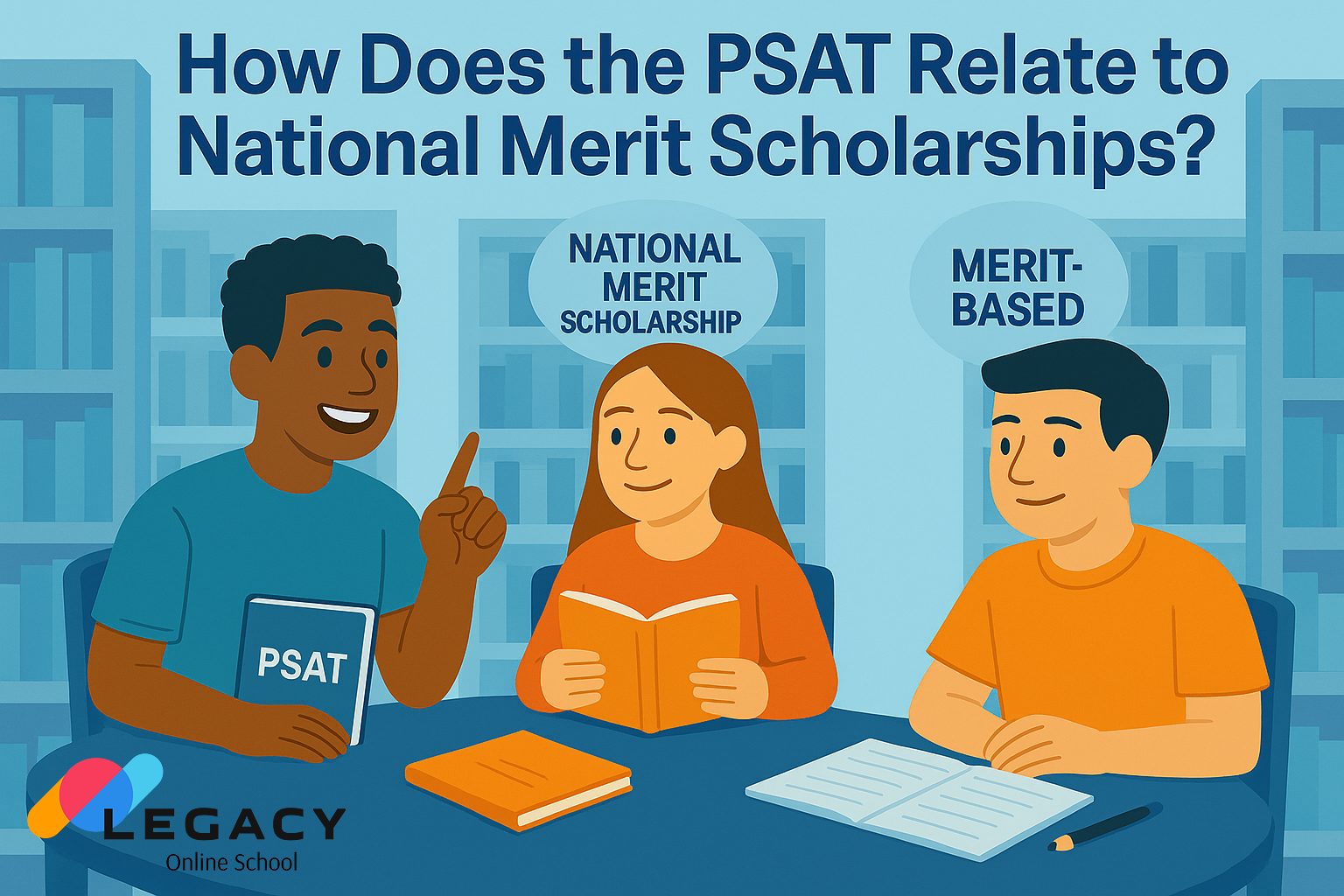
How Does the PSAT Relate to National Merit Scholarships?
What is the National Merit Scholarship?
National Merit Scholarship program is a high status scholarship program that is run by National Merit Scholarship Corporation. It identifies academically gifted high school students who show exceptional performance on PSAT. A student awarded a National Merit Scholarship has access to college financial aid which may greatly alleviate the burden of paying the college tuition fees. These are very competitive scholarships which are given on the basis of PSAT and it is therefore necessary to ensure that the students who need a scholarship perform well in this exam.
How is the PSAT score used for merit scholarships?
The PSAT scores play a very instrumental role as far as qualifying in merit scholarships are concerned. Selection index uses PSAT score to evaluate students based on scholarship. The highest scores are possible to be ranked as National Merit Semifinalist or Finalist, which will open more scholarship opportunities. Students who excel in PSAT are not only transformed into excellent students, but they also get admission into some scholarship programs that are only offered to students who score high in standardized tests.
Legacy Online School helps students build the confidence and skills they need to succeed on the SAT® and ACT®. All lessons are delivered live online, with real-time support and feedback from qualified instructors who are fully invested in your progress. If you’re serious about improving your score, we’re here to guide you every step of the way.
What is the qualifying score for the National Merit Scholarship?
The National Merit Scholarship has a qualifying score that is dependent on the state and is set every year depending on the performance of all the test-takers. Generally, to receive the Semifinalist status, students should have a PSAT score of 1400 or more. This number may however vary depending on the aggregate scores of all the participants. Students need to strive to get the maximum score to increase their chances of being awarded a scholarship because the competition among high school seniors is stiff.
Preparing for the PSAT: Tips and Resources
What resources can help students practice for the PSAT?
| Website / Platform | What It Offers | Free or Paid |
| Khan Academy | Adaptive PSAT/SAT practice questions by topic | ✅ Free |
| College Board (Bluebook App) | Official digital PSAT questions and full tests | ✅ Free |
| Kaplan | 12 free PSAT quizzes for math, reading, and writing | ✅ Free |
| Varsity Tutors | Practice questions, flashcards, and diagnostics | ✅ Free & 💲 Paid |
| Mometrix Academy | PSAT quiz with answer explanations | ✅ Free |
| Test-Guide.com | Section-based practice sets and full tests | ✅ Free |
| The Princeton Review | Sample digital PSAT questions + strategies | ✅ Free & 💲 Paid |
| PrepScholar Blog | Free downloadable PSAT practice question sets | ✅ Free |
| INeedAPencil (CK‑12) | Over 800 SAT-style practice questions | ✅ Free |
How should students allocate their study time?
Time management is the most important aspect of PSAT preparation. The first thing students need to do is to evaluate their current strengths and weaknesses in the subjects which are the subject of the test. After they have a clear picture of their level of skills, they can come up with a study plan that will focus on areas that require improvement. It is better to divide the studying hours into concentrated segments, with some time spent on practice tests and a review of the wrong answers. To maximize scores, it is necessary to practice on a regular basis, and then reflect on the performance.
What are the best strategies for tackling the PSAT sections?
In order to do well in the PSAT, students ought to employ certain strategies that are unique to each part of the test. To the reading part, an active reading strategy can be used to enhance the level of understanding and recall. In the writing part, knowledge of general grammar rules and sentence construction will help to detect the mistakes. The math part presupposes knowledge of several types of problems, and, that is why, it is essential to revise the ideas of algebra and to train the skills of solving math problems on a regular basis. Students can also take timed practice tests to be able to manage their time well in the actual PSAT.
Should You Take the SAT After the PSAT?
What are the benefits of taking the SAT after the PSAT?
Here are the benefits of taking the SAT after the PSAT shown below:
- PSAT serves as SAT practice, familiarizing students with test format and question types.
- Strong PSAT scores boost confidence and motivate rigorous SAT preparation.
- PSAT performance insights help focus study efforts, addressing weaknesses before SAT, leading to improved scores.
How does taking the PSAT help students prepare for the SAT?
The PSAT is a good starting point in the preparation of the SAT. Students are also able to make up study plans by recognizing their strengths and weaknesses based on PSAT score reports. Sitting the PSAT also equips the student with the necessary test taking skills e.g. time management and prioritizing questions which are very important in order to do well in the SAT. This is a continuity in preparation which results in a smoother transition between the PSAT and the SAT.
What is the timeline for taking the SAT after the PSAT?
The PSAT is usually administered during sophomore or junior year and the SAT is well-timed to be taken soon after, usually during the spring of junior year or fall of senior year. This schedule will enable the students to utilize the knowledge that they have obtained during their PSAT experience since by this time the information will still be fresh in their mind. It is always advisable to plan early and register early for the SAT so that the student can get his desired dates and place to take the test.