Key takeaways
Delta College offers an affordable education option in Michigan, with tuition rates that are competitive both locally and nationally. Understanding the full cost, including additional fees and financial aid opportunities, is crucial for prospective students to make informed decisions about their education.
- Tuition for in-district and out-of-district students is approximately $1,104 per semester, while out-of-state students pay around $9,312 per semester (Delta College, 2025-2026).
- Students can benefit from various financial aid options, including federal grants, work-study programs, and over 150 internal scholarships.
- The estimated total annual cost for California residents is between $2,000-$3,000, while international students may face costs exceeding $18,000 (Delta College).
- Delta College provides flexible payment plans and resources to help students navigate their financial responsibilities effectively.
Contents
If you’re thinking about attending Delta College, you’re probably wondering how much it’ll cost and whether it’s a smart financial move. Good news: Delta is one of the most affordable options in Michigan and across the country. But don’t just look at the sticker price—understanding the full cost and how to manage it is key to making the most of your college experience.
What Is the Estimated Cost of Tuition at Delta College?
Here’s the current estimate for tuition at Delta College for the 2025-2026 academic year:
| Residency Status | Cost Per Credit Hour | Estimated Full-Time Cost (12 credits/semester) |
| In-District (San Joaquin County) | $46 | ~$1,104 per semester |
| Out-of-District (California residents outside San Joaquin) | $46 | ~$1,104 per semester |
| Out-of-State / International | $388 | ~$9,312 per semester |
Tuition is just part of the total cost. Students also pay additional fees for student services, health, and transportation. On average, these fees add $20-$60 per semester, depending on course load.
Delta College estimates that the total annual cost, including tuition, fees, books, supplies, and transportation, is around:
- $2,000-$3,000 per year for California residents
- $18,000+ per year for international students (including living expenses)
Are There Additional Costs Involved?
Here’s a clear overview of typical additional costs reported by Delta College and its students:
| Category | Estimated Cost | Details |
| Textbooks & Materials | $400-$1,000 per semester | Varies by course. STEM and nursing classes often have higher material costs |
| Course/Lab Fees | $20-$150 per course | Charged for science labs, studio classes, or tech-based programs |
| Technology Fee | $75 per semester (avg.) | Covers access to platforms like Desire2Learn (D2L) and campus Wi-Fi |
| Parking Permit | $40 per semester | Required for all on-campus students |
| Health Services Fee | ~$10 per semester | Supports on-campus wellness and emergency care |
| Graduation Fee | $25 (one-time) | Required when applying for graduation |
| Program-Specific Tools | $100-$500+ | Examples: welding gear, scrubs, culinary kits, etc. |
What Are the Payment Options Available?
“Log in to the My Delta portal and click financial account. Fall 2025 balance isn’t available to pay yet”
Delta College offers flexible payment solutions, including:
- Installment payment plans through Nelnet
- Online payments via credit/debit card or e-check
- Financial aid hold to defer charges while aid is pending
- Third-party sponsorships (employers, state programs, etc.)
All payment options are managed through Student Self-Service in the portal.

What Financial Aid Opportunities Are Available for Students?
Here’s a quick breakdown of the major types of financial aid available at Delta College:
| Type of Aid | What It Covers? | Details |
| Federal Pell Grant | Tuition, books, living expenses | Need-based; does not have to be repaid. Awarded through FAFSA |
| Federal Work-Study | Part-time campus jobs | Based on financial need. Apply early—funds run out quickly |
| Michigan Reconnect | Full tuition for eligible adults | Covers in-district tuition for students age 25+ without a college degree |
| TIP (Tuition Incentive Program) | Tuition and fees | For students who qualified for Medicaid for 24 months between ages 9-12 |
| Delta College Scholarships | Varies | Over 150 internal scholarships; one application applies for all |
| External Scholarships | Anything from books to full tuition | Offered by local organizations, nonprofits, or national programs |
| Student Loans | Tuition, fees, housing, etc. | Federal Direct Loans available via FAFSA; repayment required after college |
How to Apply for Financial Aid?
Applying for financial aid might seem like a long process, but it really comes down to a few key steps—and most students at Delta College qualify for something. Whether you’re aiming for a federal grant, work-study, or local scholarships, it all starts with one form: the FAFSA.
| Step | What to Do? | Details |
| Gather your documents | Social Security Number, tax returns, W-2s, and bank info | If you’re a dependent, you’ll need your parents’ info too |
| Create an FSA ID | Go to studentaid.gov and set up your login | This ID lets you sign and access your FAFSA online |
| Fill out the FAFSA | Complete it at studentaid.gov | Use Delta College’s school code: 002251 |
| List your colleges | Include all schools you’re considering, even if you’re undecided | Your FAFSA info goes to them automatically |
| Submit and sign | Electronically sign with your FSA ID and submit before the priority deadline | Early applicants often receive more aid |
| Review your SAR | Your Student Aid Report shows your expected family contribution (EFC) or Student Aid Index (SAI) | Correct errors quickly so there are no delays |
| Check with Delta | Monitor your student portal and email for additional forms or verification | Some students are selected for a process called “verification”—don’t ignore those emails |
| Apply for other aid | Fill out Delta’s scholarship application and search for local awards | One app = 150+ scholarships. Start at delta.edu/scholarships |
What Is the Loan Process for Delta College Students?
The loan process at Delta starts after you’ve submitted your FAFSA. If you’re eligible, you’ll receive a financial aid award letter that includes federal loan offers. You can accept all, some, or none of the loans listed.
Here’s how the process works from start to finish:
| Step | Action Required | Notes |
| Submit FAFSA | Complete it at studentaid.gov | Use Delta College’s school code: 002251 |
| Review your award letter | Log into your Delta College student portal | Look for loan offers under “Financial Aid” |
| Accept or decline loans | Choose how much to borrow (you can accept a partial amount) | Click “Accept” in the portal and confirm your choice |
| Complete Entrance Counseling | Required at studentaid.gov | Takes ~30 minutes. Explains your rights and responsibilities as a borrower |
| Sign Master Promissory Note (MPN) | Complete at studentaid.gov | Legally binding agreement to repay the loan |
| Wait for disbursement | Funds are sent directly to Delta College and applied to your account | Refunds (if any) are issued to you afterward |
Most students receive Direct Subsidized Loans or Direct Unsubsidized Loans. The difference? Subsidized loans do not accrue interest while you’re in school at least half-time. Unsubsidized loans do.
What Programs Does Delta College Offer?
The college is known for its focus on practical skills and career-readiness. From health sciences and business to advanced manufacturing and cybersecurity, students can choose from a wide variety of degree and certificate options that match today’s job market.
Here’s a breakdown of the program categories currently available at Delta College:
| Program Area | Examples of Specific Programs | Degree Types Offered |
| Health & Wellness | Nursing, Dental Hygiene, Medical Assistant, Radiography | Associate in Applied Science (AAS), Certificate |
| Business & Finance | Accounting, Business Management, Marketing | Associate in Business Studies (ABS), Certificate |
| Skilled Trades | Welding, HVACR, Electrical Technology, Automotive Service | AAS, Certificate, Short-Term Training |
| STEM & Engineering | Computer Science, Mechanical Engineering Tech, Environmental Tech | Associate in Science (AS), Transfer Pathways |
| Public Service | Criminal Justice, Fire Science, Corrections Officer Academy | AAS, Certificate |
| Liberal Arts & Education | Elementary Education, Social Work, General Studies | Associate in Arts (AA), Transfer Programs |
| Media & Design | Graphic Design, Digital Film Production, Broadcasting | AAS, Certificate |
| IT & Cybersecurity | Network Administration, Cybersecurity, Programming | AAS, Certificate |
Delta also offers 100% online programs in business, health management, and general studies for students who need more flexibility. Dual enrollment and early college partnerships are available for high school students looking to jumpstart their college journey.
How to Choose the Right Program for Your Career?
At Delta College, you’ll find dozens of options, from healthcare and skilled trades to computer science and education. But how do you figure out which one actually fits your goals?
The best place to start is with your long-term plan. What kind of work environment do you want? How fast do you want to enter the job market? Legacy Online School helps students work backward from their ideal future—so every college decision supports that vision.
Here’s a breakdown of how to approach your program choice strategically:
| Career Goal | Recommended Program Type at Delta | Why It Fits? |
| Start working fast in a hands-on job | Certificate or AAS in Welding, HVAC, or Automotive Tech | Prepares you in 1-2 years for high-demand technical roles |
| Work in healthcare | AAS in Nursing, Dental Hygiene, or Medical Assistant | Clinical hours and certification-ready programs for patient care careers |
| Transfer to a four-year university | AA or AS in Liberal Arts, Education, or Science | Credits transfer easily to bachelor’s programs in Michigan and beyond |
| Launch a business or work in finance | ABS in Business Management or Accounting | Focused training in management, marketing, and budgeting |
| Enter digital or creative industries | AAS in Graphic Design or Digital Film | Builds a professional portfolio and hands-on experience in creative fields |
| Work in public service or law | AAS in Criminal Justice or Fire Science | Combines theory and real-world training for entry into civil service roles |
| Break into tech | AAS in Cybersecurity or Programming | Includes coding, systems training, and networking certifications |
Don’t choose based on what your friends are doing or what feels “safe.” Instead, think about:
- Your interests and strengths
- Job market demand
- Program outcomes
If you’re undecided, you can always start in General Studies or speak with a Delta College counselor. You’ll get exposure to multiple fields while earning credits that apply across programs
Are There Technical Programs Available?
Here’s a snapshot of what Delta offers in the technical field:
| Technical Program | Focus Area | Credential Offered | Time to Completion |
| Welding Engineering Technology | Fabrication, blueprint reading, TIG/MIG welding | AAS, Certificate | 1-2 years |
| Electrical Technology | Residential, commercial, and industrial wiring | AAS, Certificate | 2 years |
| HVACR | Heating, ventilation, A/C, refrigeration | Certificate | 2 semesters |
| Automotive Service Technology | Diagnostics, repair, automotive systems | AAS, Certificate | 2 years |
| Advanced Manufacturing | CNC machining, robotics, quality control | AAS, Certificate | 1-2 years |
| Computer Networking/Cybersecurity | Systems, firewalls, network setup | AAS, Certificate | 2 years |
| Computer Science/Programming | Software development, Java, C++, database logic | AAS | 2 years |
| Engineering Technology | Drafting, CAD, 3D modeling | AAS | 2 years |
Each program has its own entry requirements and recommended prep courses, so it’s smart to check with an academic advisor early on.
What Is the Acceptance Rate for Delta College?
“Most universities, public or private, accept the majority of students who apply. All reputable private schools are also non-profits – that doesn’t mean they’re inexpensive – it just means that they aren’t trying to make money as their primary goal”
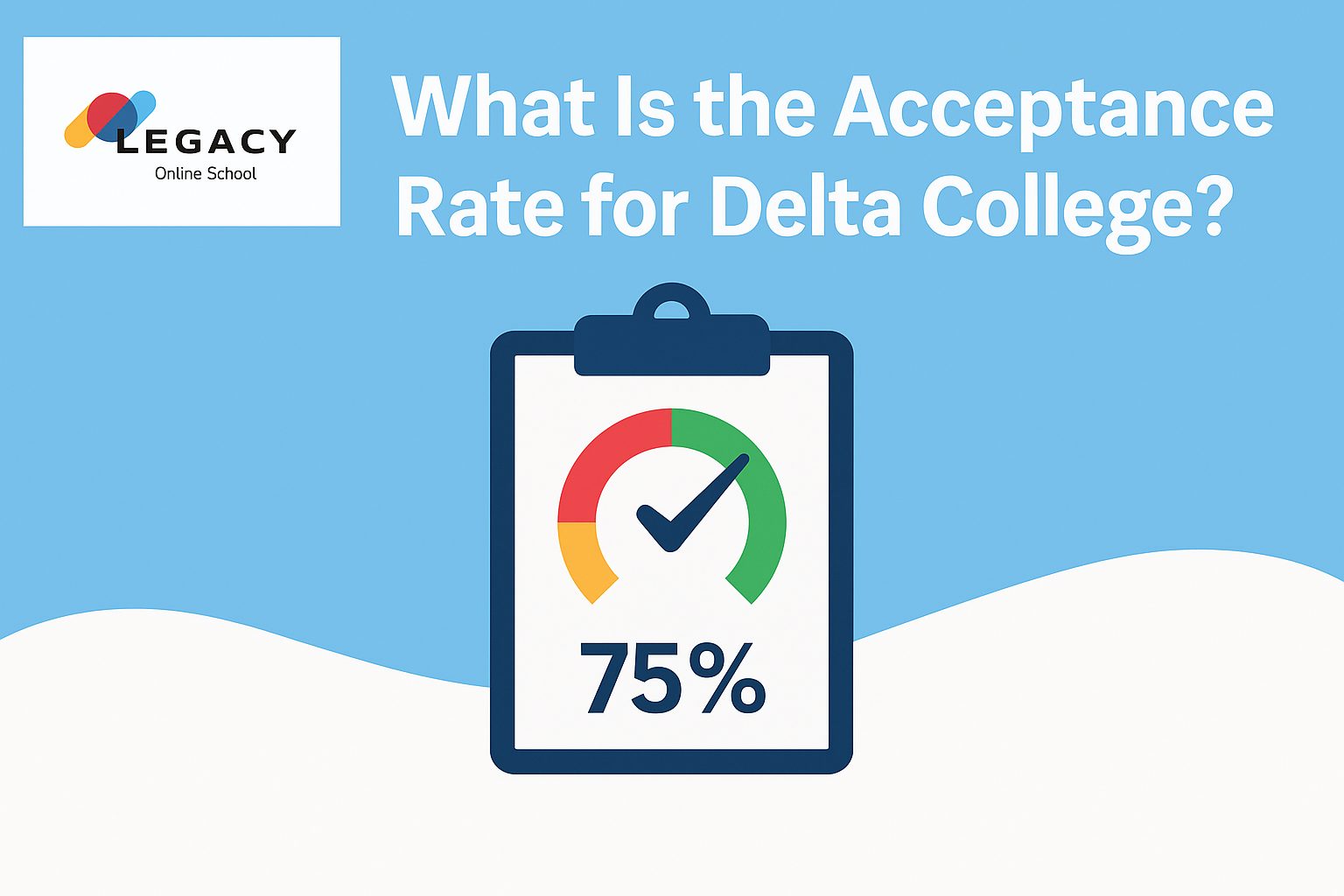
Delta College is an open-admission institution, which means it accepts 100% of applicants who meet basic enrollment requirements. You don’t need a high GPA, test scores, or a competitive application—if you have a high school diploma or GED, you’re in.
But don’t let that fool you into thinking the experience is less serious. While the college is open-access, many of Delta’s programs—especially in healthcare and skilled trades—have limited seats and selective entry once you’re enrolled.
What Factors Influence Acceptance?
For open enrollment, you’re good with basic eligibility. But for selective programs, you may need:
- Prerequisite courses
- Minimum GPA (usually 2.5-3.0)
- Entrance exams (like HESI for Nursing)
- Interview or program-specific essay
Always check the exact program requirements before applying.
How Does Delta College Prepare You for Your Career?
Delta College isn’t just about earning credits—it’s about getting ready for your future. From day one, students build real skills that employers want. You’ll learn through hands-on labs and instructors who’ve actually worked in the field.
Whether you’re studying cybersecurity, welding, dental hygiene, or business, you’re being trained to do the job—not just take a test. Delta makes sure of that with career-focused programs that include internships, industry certifications like CompTIA or CNA, and training with the same tools you’ll use on the job.
Companies like Dow and GM often hire directly from Delta. And if you need help with résumés or interviews, Delta’s Career Services team is ready to guide you. Students on Reddit say they felt truly “career-ready” by the time they finished. And if you plan to transfer to a university, Delta’s guided pathways help you stay on track with no wasted credits.
|
Top Tips from Our Expert
|

Alyssa Mendoza, AP Coordinator and College Prep Specialist
Sources: Delta College, Reddit