Key takeaways
Boarding school offers a unique, immersive educational experience that extends beyond academics, fostering independence, strong friendships, and personal growth. Understanding the various types of boarding schools and their specific offerings is crucial for families to make informed decisions that align with their child's needs and aspirations.
- Boarding school graduates often transition more smoothly into university life due to the supportive environment and rigorous academics (source: Reddit).
- Students benefit from managing their own schedules and living with peers, which fosters deep bonds and support systems.
- Many boarding schools provide college-level labs and athletic facilities, enhancing the overall educational experience.
- When choosing a school, consider factors like class sizes, extracurricular offerings, and campus culture to find the best fit for your child.
Contents

Boarding school is more than just academics and dorm rooms—it’s a full-time, all-in experience. For many families, it’s a big decision that comes with big rewards: independence, lifelong friendships, rigorous academics, and a tight-knit community that can shape a student’s future in powerful ways. But not all boarding schools are created equal. Choosing the right one means understanding your child’s needs, your family’s values, and what each school truly offers beyond the brochure photos.
What Are the Real Benefits of Boarding School Life?
“I went from boarding school in the North of England from the ages of 11-18… The pros: Smaller classes; higher standard of education; you live with your friends… Usually longer school holidays… an all‑round safe environment”
Boarding school isn’t just about studying harder—it’s about living education. Students don’t leave learning behind at 3 PM. They live where they learn, with teachers, mentors, and classmates all around. Some real benefits include:
- Students manage their own schedules and daily life
- Longer class periods and evening study hours
- Living with peers creates deep bonds and support systems
- Many schools offer college-level labs and athletic facilities
- Boarding school grads often transition more smoothly into university life
How to Choose the Right Boarding School for Your Child?
Before picking a school, think beyond rankings. What environment will help your child grow? Ask yourself:
- Is your child more artistic, athletic, academic, or social?
- Do they thrive in structure or need flexibility?
- Will they benefit from a co-ed or single-gender environment?
Then, look at:
- Class sizes and teacher-student ratios
- College placement records
- Extracurricular offerings
- On-campus support for emotional and social development
Campus visits and student shadow days can give you a real feel for the community.
What Are the Different Types of Boarding Schools?
Not every boarding school follows the same model. Knowing the differences helps you filter options faster.
| Type | Focus | Ideal For |
| Traditional Boarding School | Broad academics + structure | Students seeking college prep and community life |
| Prep School (College Prep) | Intense academics, often with AP/IB tracks | High-achievers aiming for Ivy League or top colleges |
| Military Boarding School | Discipline, leadership, fitness | Students needing structure or interested in service |
| Religious Boarding School | Faith-based values + academics | Families wanting spiritual education |
| Therapeutic Boarding School | Emotional and behavioral support | Students needing mental health care alongside academics |
| Arts or Sports Academies | Specialized training + academics | Talented students in specific disciplines |
Prep Schools vs. Traditional Boarding Schools
Here’s how the two compare:
| Feature | Prep Schools | Traditional Boarding Schools |
| Core Focus | Competitive college admissions | Holistic development and community |
| Academic Rigor | Intense (AP, IB, advanced courses) | Strong, but with room for exploration |
| College Counseling | Aggressive, metrics-driven | Supportive, personalized |
| Campus Culture | Fast-paced, ambitious | Tight-knit, reflective |
| Extracurricular Emphasis | Academic teams, competitions, leadership tracks | Arts, sports, service learning |
| Alumni Network | Deep connections to elite universities and careers | Strong personal ties, often more diverse paths |

How International Boarding Schools Support Foreign Students?
International boarding schools—especially those in the U.S., UK, Canada, or Switzerland—often have dedicated staff to support students from abroad. Services include:
- English as a Second Language (ESL) programs
- College counseling for international applications
- Cultural transition support and mentorship
- Visa and immigration help
Look for schools that offer International Baccalaureate (IB) programs or have a high percentage of global students. This indicates strong infrastructure for foreign families.
Specialized Programs You’ll Find in Modern Boarding Schools
Today’s boarding schools go far beyond core academics. Many offer cutting-edge electives and programs tailored to student interests. Popular examples include:
- Robotics and AI labs
- Filmmaking and digital arts studios
- Sustainability and environmental science tracks
- Pre-med and pre-law pathways
- Entrepreneurial incubators and startup labs
If your child has a specific interest, ask about capstone projects, mentorships, and access to industry professionals.
What Should Students Expect From Daily Life at Boarding School?
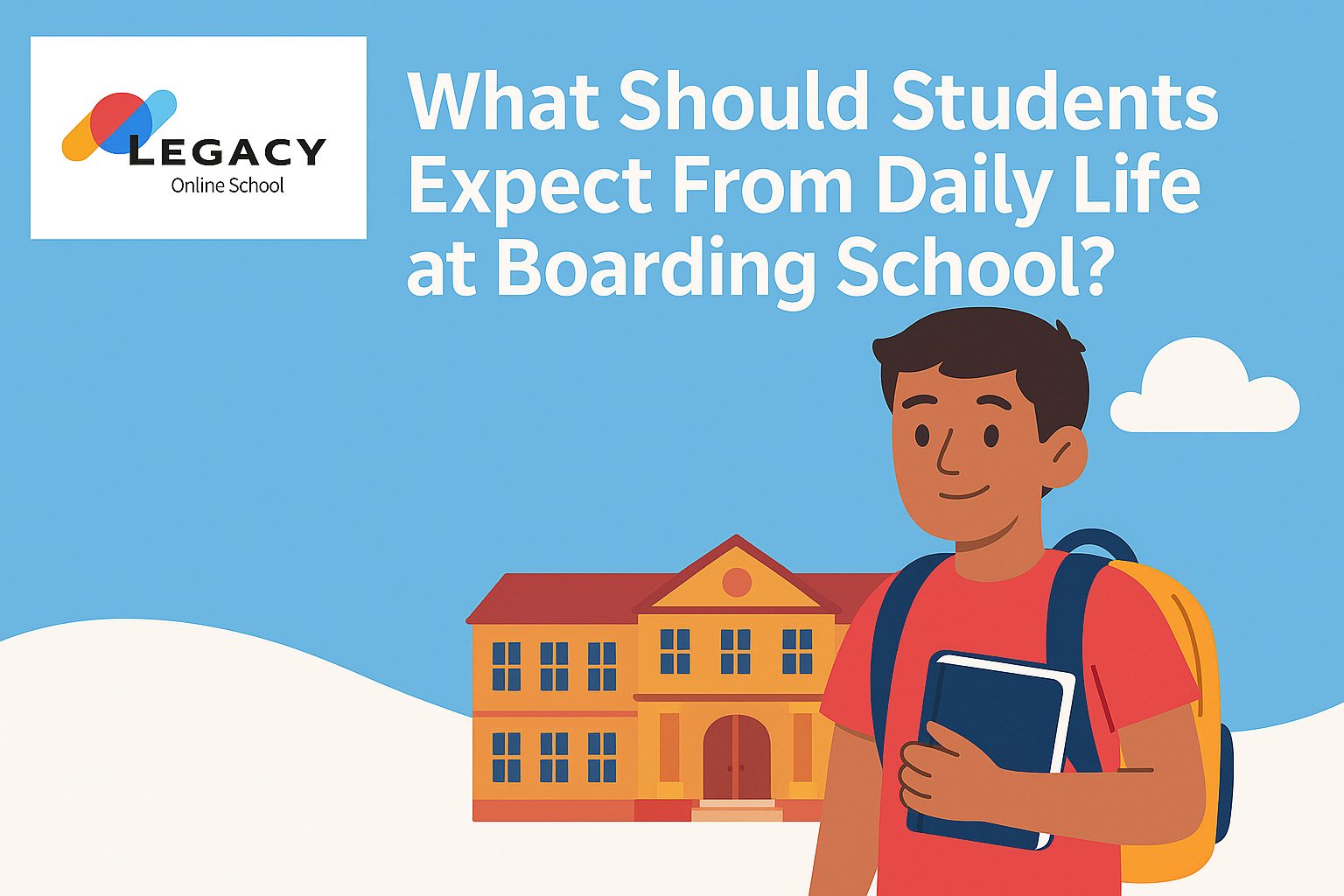
A typical weekday might look something like this:
| Time | Activity |
| 7:00 AM | Wake-up and breakfast |
| 8:00 AM–3:00 PM | Classes with built-in breaks |
| 3:30–5:00 PM | Athletics, arts, or club activities |
| 5:30 PM | Dinner with dorm or house |
| 7:00–9:00 PM | Supervised study hall or homework |
| 9:30 PM | Free time or dorm check-in |
| 10:00 PM | Lights out (for younger students) |
What Does the Application Process Look Like?
The process can feel like a mini college application. Be ready for:
- Online application
- Academic transcripts from the past 2–3 years
- Standardized testing (often SSAT, ISEE, or TOEFL for international applicants)
- Teacher recommendations
- Personal essay or writing sample
- Interview (in person or Zoom)
Deadlines vary, but most top schools have December–January deadlines with results released in March.
How to Prepare for Your Boarding School Interview?
“It’ll likely be equal parts questions about you personally and questions about academics. Definitely also expect a question or two about why you want to attend that school in particular … The questions about you will be things like what books you like to read, what your interests outside of school are … Take advantage of the interview to explain any shortcomings or highlight any strengths”
Start by understanding the school: what values does it promote, what kinds of students thrive there, and what programs stand out? When you know what makes the school unique, it’s easier to explain why it’s a fit for you. Then, practice answering questions out loud—not to memorize, but to get comfortable. Expect questions like: “What’s your favorite subject and why?” or “Describe a time you overcame a challenge.” Be honest and specific, and try to show both your academic interests and personal growth.
Body language also matters. Maintain eye contact, sit up straight, and don’t be afraid to smile. If it’s a virtual interview, test your tech and lighting beforehand. And finally, bring your own questions—it shows maturity and genuine interest.
|
Top Tips from Our Expert
|

Ana Lucía Torres, Senior Learning Advisor
Sources: Boarding School Review, TABS, Reddit